The Aerodynamic Paradox
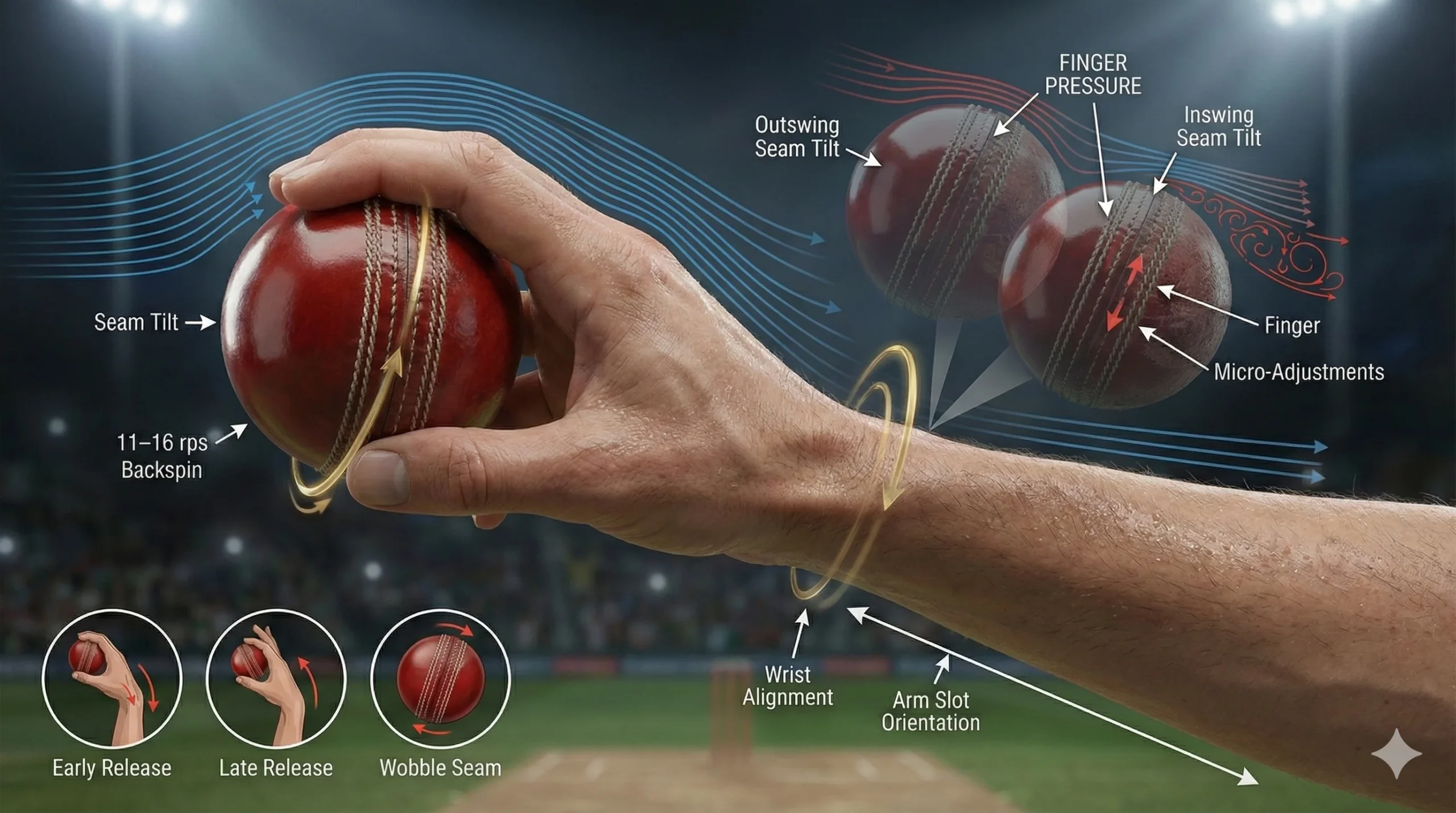
In the world of fast bowling, “Reverse Swing” is the ultimate dark art. While conventional swing relies on the smooth side of the ball to create a pressure differential, reverse swing—usually occurring after the 40th over—defies intuition. In 2026, wind-tunnel testing and 4K high-speed tracking have finally demoted this “magic” to pure fluid dynamics.
Boundary Layer Transition
Reverse swing happens when the “rough” side of the ball becomes so turbulent that the boundary layer of air trips into turbulence earlier than on the smooth side.
- The Critical Velocity: For reverse swing to trigger, the ball typically needs to be delivered at speeds exceeding 135 km/h (84 mph).
- The Humidity Factor: Contrary to popular belief, high humidity doesn’t “make the ball heavy”; it increases air density, which allows the turbulent wake to exert more lateral force on the ball’s trajectory.
- Weight Distribution: Modern bowlers are masters of “Polishing Strategy,” keeping one side pristine while allowing the other to scuff naturally, creating a weight imbalance that, when combined with the seam angle, leads to late, late movement that shatters stumps.